Average Cost of Daily Dog Walks: 2026 Pricing Guide

Updated: Sep 16
Table of Contents
What the Average Cost of Daily Dog Walks Looks Like in 2026
Quick Comparison: Pricing by Walk Type and Frequency
Dog Walking Rates Per 30 Minutes: What You Actually Pay
30-Minute vs 60-Minute Walks: The Real Cost Difference
Factors Affecting Dog Walking Prices
Location, Experience Level, and Number of Dogs
Recurring Dog Walking Service Discounts: How to Save on Daily Walks
Flat Fee vs Hourly Rate: Which Pricing Model Fits Your Schedule?
Add-Ons and Hidden Costs: Insurance, Bonding, and Surcharges
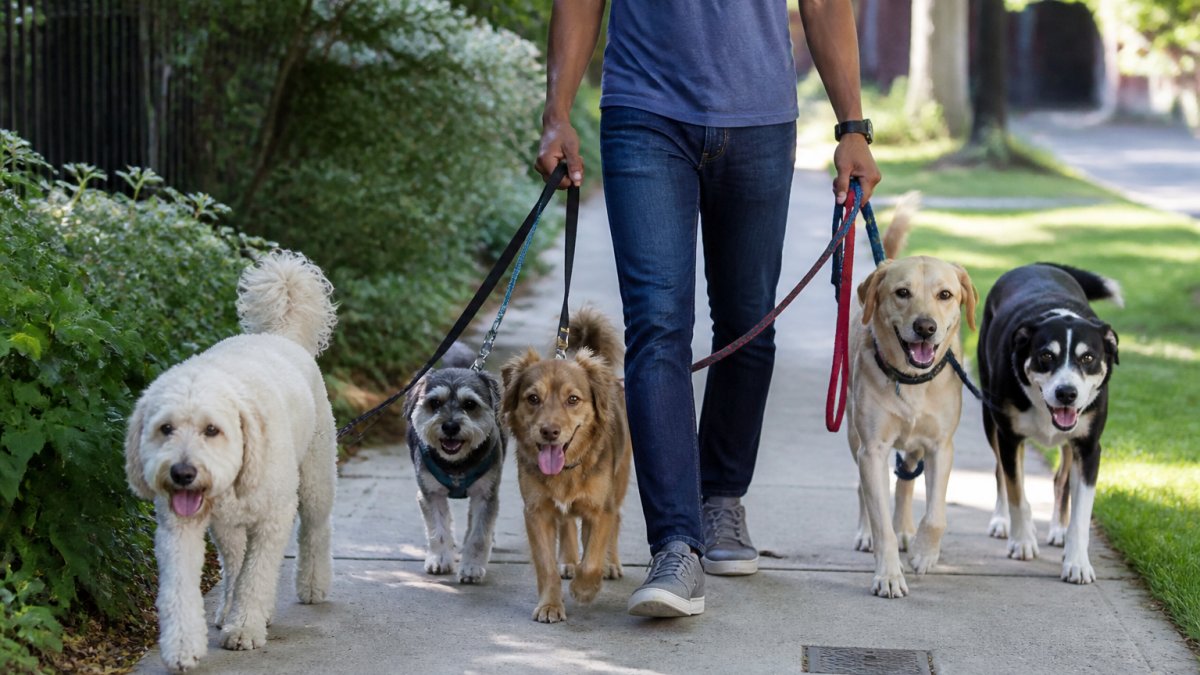
Group Walk vs Private Walk: What Changes in Cost and Care
How to Budget for Daily Dog Walks Without Cutting Corners
Frequently Asked Questions
Last Updated: September 15, 2026
What the Average Cost of Daily Dog Walks Looks Like in 2026
Daily dog walks have become a standard line item in many household budgets, and for good reason. A reliable midday walk keeps a dog exercised, socialized, and calm while owners are at work. This guide breaks down how the average cost of daily dog walks is actually structured, what drives the price up or down, and how to budget for five walks a week without overpaying.
They aren't. Walk duration, walker experience, whether your dog walks alone or in a group, and whether the walker carries liability insurance all change what you pay. Daily dog walks priced at a flat rate often look more expensive up front than an hourly quote, but the flat fee usually bundles in the things that matter: consistency, a background-checked walker, and a set schedule you can plan around.
American Pet Products Association pet industry spending data tracks pet care spending trends, and walking services consistently rank among the most-used recurring pet services.
Quick Comparison: Pricing by Walk Type and Frequency
Walk Type | Typical Billing Model | What Drives the Price | Best For |
30-minute solo walk | Flat fee per visit | Walk duration, walker experience | Anxious or reactive dogs |
30-minute group walk | Flat fee, discounted per dog | Number of dogs, route efficiency | Social, high-energy dogs |
60-minute solo walk | Flat fee or hourly rate | Time, distance, terrain | Working breeds, seniors needing pace control |
Recurring daily (5x/week) | Flat rate with loyalty discount | Frequency commitment | Full-time commuters |
On-demand / backup walk | Premium flat fee | Urgency, availability window | Unpredictable schedules |
The table above is the fastest way to see why two neighbors can pay very different amounts for what sounds like the same service.
Dog Walking Rates Per 30 Minutes: What You Actually Pay
The 30-minute walk is the industry's default unit, and most providers quote around it. A 30-minute visit is typically the standard visit for a midday break: enough time for a bathroom stop, a real walk, and a few minutes of attention before the walker leaves.
The per-visit price often assumes a few things: your dog is ready at the door, the walker isn't waiting on a lockbox code, and the route isn't doubling back to collect three other dogs.
If that rate comes from a walker juggling eight dogs on one route, your dog may spend most of the visit waiting rather than walking. That's not a discount. It's a different service.
Watch Out Never book a walker based on price alone without confirming what happens if your dog gets sick, refuses to walk, or the walker can't make it.
30-Minute vs 60-Minute Walks: The Real Cost Difference
A 60-minute walk usually costs more than a 30-minute walk, but rarely double. Most providers price the longer visit at a premium rather than a straight multiple, because the walker's travel time and setup are the same either way.
That's the part worth understanding. You're not just buying minutes. You're buying a service visit, and a chunk of that visit is fixed cost regardless of length. So the jump from 30 to 60 minutes is often the better value per minute, even though the total is higher.
For most dogs, a 30-minute walk covers basic needs. For high-energy breeds, puppies in training, or dogs who get destructive when bored, the 60-minute option pays for itself in calmer behavior.
Factors Affecting Dog Walking Prices
Several variables move the price of a walk, and understanding them helps you predict your own bill instead of guessing. The three that matter most are location, experience level, and how many dogs are on the walk.
Location, Experience Level, and Number of Dogs
Geographic location is the largest single factor. A walker operating in a dense, walkable neighborhood with high demand can charge more than one in a lower-demand area. This is a cost of living adjustment in practice: rent, insurance, and travel costs differ block by block, and those costs flow into the rate.
Experience level comes next. A walker with years of handling anxious or reactive dogs, formal certification, and a clean background check commands more than someone just starting out. That premium is usually worth it. A walker who understands dog body language prevents problems before they happen.
Number of dogs changes the math in your favor. Multi-dog households often get a discount on the second and third dog, since the walker is already there. But be careful: a "discount" that turns your dog's solo walk into a group walk isn't a discount at all.
Location: Higher-demand, walkable areas cost more
Experience and certification: Skilled, vetted walkers charge a premium
Number of dogs: Multi-dog discounts apply, but confirm it's still a private walk
Walk frequency: Daily commitments unlock recurring discounts
Timing: Weekend rates and holiday surcharges add on top
Insurance Information Institute guidance on liability coverage explains why bonding and liability insurance matter for anyone entering your home and handling your pet.
Recurring Dog Walking Service Discounts: How to Save on Daily Walks
The most reliable way to lower your per-walk cost is to commit to a recurring schedule. Providers reward frequency because it lets them plan routes and fill their calendar, and they pass some of that certainty back to you.
Recurring dog walking service discounts typically take one of three forms:
Flat-rate daily packages - a set weekly price for five walks, lower than five individual bookings
Loyalty pricing - the per-walk rate drops after a set number of weeks
Prepaid bundles - you buy a block of walks up front at a reduced rate
The trade-off is flexibility. A prepaid bundle locks you in, so if your schedule changes often, a flat weekly rate with a clear cancellation window is usually smarter.
Pro Tip Ask specifically what the cancellation policy is before you commit to a recurring plan. A walker who lets you cancel with a few hours' notice without a charge is worth more than a slightly cheaper one who bills you for every missed visit.
Flat Fee vs Hourly Rate: Which Pricing Model Fits Your Schedule?
For most dog owners, a flat fee per visit is easier to budget than an hourly rate. You know the number before the walk starts, and it doesn't change if the walker stops to chat with a neighbor or your dog takes an extra sniff break.
Hourly pricing makes sense in narrow cases. If you need a walker for an unusually long block of time, or you're combining a walk with pet sitting, hourly can be more transparent.
Here's the practical rule: if you want predictability, choose flat fee. If you want to pay strictly for time, choose hourly. Most daily-walk clients want predictability.
Pricing Model | Predictability | Best For | Watch Out For |
Flat fee per visit | High | Daily recurring walks | Confirm what's included |
Hourly rate | Medium | Long or combined visits | Clock-watching, rounding |
Prepaid bundle | High | Committed schedules | Lock-in, refund terms |
Add-Ons and Hidden Costs: Insurance, Bonding, and Surcharges
The base rate is only part of what you'll pay. Add-ons and surcharges are where budgets quietly stretch, and they're the part competitors gloss over.
Liability insurance and bonding are the two you should always confirm. Insurance protects against accidents; bonding protects you against theft. A walker who is fully insured and bonded has absorbed a real business cost, and that shows up in the rate, correctly.
Then come the surcharges:
Holiday surcharges - most walkers charge more on major holidays
Weekend rates - Saturdays and Sundays often carry a premium
Last-minute or on-demand bookings - urgency costs more
Extra services - feeding, medication, or extended visits add on
GPS tracking and digital report cards are increasingly standard rather than paid extras.
Key Takeaway The true cost of a walk is the base rate plus any surcharges that apply to your schedule. Owners who walk daily but travel on weekends should ask about weekend rates up front, not after the first invoice.
Group Walk vs Private Walk: What Changes in Cost and Care
How to Budget for Daily Dog Walks Without Cutting Corners
Frequently Asked Questions
Is $20 for a 30-minute dog walk a good rate?
A $20 flat rate for a 30-minute walk sits within the typical range for urban areas with a higher cost of living. What matters most is what that rate includes: whether the walker is insured and bonded, whether you get a GPS-tracked report card, and whether the price stays the same on weekends and holidays. A flat fee that covers all of that is often better value than a lower hourly rate with add-on surcharges.

Does the number of dogs per walk change the price?
Yes, most professional dog walkers charge more for additional dogs from the same household, though usually not double. A common structure is a base rate for the first dog plus a smaller per-dog fee for each additional one. Group walks, where your dog walks with other clients' dogs, often cost less per dog than a private walk because the walker spreads time across multiple animals.
Are there discounts for booking daily recurring dog walking services?
Many walkers offer a lower per-walk rate when you commit to a recurring schedule, usually five days a week. These discounts exist because the walker can plan a fixed route and reduce gaps in their day. Ask whether the discount applies to every walk or only to a set number per month, and confirm the cancellation policy so an unexpected schedule change does not cost you the discounted rate.
What factors affect dog walking prices the most?
Walk duration, your geographic location and its cost of living, the walker's experience level and certifications, and the number of dogs in the walk are the biggest drivers. Weekend rates, holiday surcharges, and whether the walker carries liability insurance and bonding also shift the final price. A 60-minute private walk in a high cost-of-living area with an experienced, insured walker will always cost more than a 30-minute group walk.
Contact


Comments