Signs Your Dog Needs More Exercise: 7 Key Signals

Updated: Sep 16
Table of Contents
Signs Your Dog Needs More Exercise: What to Watch For
Destructive Behavior and Chewing
Hyperactivity, Pacing, and Restlessness
Behavioral Warning Signs: Barking, Whining, and Attention-Seeking
Excessive Barking and Vocalization
Withdrawn or Depressed Behavior
Physical Signs: Weight Gain, Lethargy, and Trouble Sleeping
Signs of Dog Boredom vs. a Medical Problem
What Boredom and Under-Exercise Look Like
What a Medical Problem Looks Like
A Simple Decision Framework
How Long Should a Dog Exercise Daily? Breed and Age Guidelines
Breed Energy Tiers: A Quick Reference
Age Adjustments
The Mental Fatigue vs. Physical Exhaustion Distinction
The Overtired Paradox
Benefits of Professional Dog Walking for Busy Owners
Frequently Asked Questions
Last Updated: September 14, 2026
Signs Your Dog Needs More Exercise: What to Watch For
A dog that chews the sofa leg, barks at nothing, or paces at 9 p.m. is telling you something specific: the daily walk isn't cutting it. Recognizing the signs your dog needs more exercise early keeps small behavior problems from hardening into habits that take months to undo. This guide from Bark West covers the seven signals that matter most, how to tell boredom from a medical issue, and how much activity your dog needs daily.
Here's what most owners miss: not every restless dog needs a longer walk, some need a harder one. A tired dog and a satisfied dog are different things, and that gap explains most behavior problems.

Destructive Behavior and Chewing
Chewed baseboards, shredded cushions, and dug-up flower beds top the list of exercise-deficit signals. Destructive behavior happens when a dog has energy to burn and no approved outlet.
Puppies and adolescents are the usual suspects, but adult dogs left alone for long stretches develop the same habits. The fix isn't punishment, it's redirecting energy before it finds your furniture. Scolding hours after the damage teaches nothing except that you're unpredictable when you walk in.
Provide a vigorous walk or play session before you leave for work
Rotate puzzle toys and long-lasting chews so the dog has something to do
Consider a midday walk if your schedule keeps you out for ten hours
Hyperactivity, Pacing, and Restlessness
A dog that can't settle, even at home, often has unmet physical needs. Pacing and an inability to lie down for more than a few minutes usually point to pent-up energy, not a personality flaw.
Watch for the dog that follows you room to room, jumps up uninvited, or circles before collapsing. Some of this is normal breed behavior, a working or herding breed with a sedentary lifestyle shows it more intensely than a lap dog.
Pro Tip Try a "sniff walk" instead of a fast march. Letting your dog stop and investigate for 20 minutes tires the brain as much as the body, and many owners find it settles a restless dog faster than a longer brisk walk.
Behavioral Warning Signs: Barking, Whining, and Attention-Seeking
Vocal and clingy behavior often gets labeled neediness when it's really an exercise gap. Dogs that bark at passersby, whine at the door, or shove toys into your lap are frequently under-stimulated.
Excessive Barking and Vocalization
Barking at every sound, whining when you leave the room, or howling during the day are classic signs of a dog with too much energy and too little to do. Excessive barking often spikes in the late afternoon, when a dog's activity window collides with an empty house.
If your neighbors are hearing more from your dog than you are, that's a signal worth taking seriously.
Withdrawn or Depressed Behavior
Not every under-exercised dog acts out, some shut down. A dog that used to greet you at the door and now barely lifts its head may be bored, not tired. Withdrawn behavior looks like lethargy in people: sleeping more, losing interest in toys, avoiding interaction.
This one is easy to misread as "calm." It usually isn't.
Physical Signs: Weight Gain, Lethargy, and Trouble Sleeping
Body condition and sleep patterns tell you what behavior alone can't. Weight gain, low energy, and disrupted sleep are physical signs your dog needs more exercise, and they build on each other.
A dog carrying extra weight moves less, which leads to more weight gain (avma.org). Obesity raises the risk of joint problems, especially in breeds prone to hip and knee issues (avma). Daytime lethargy often flips into nighttime restlessness.
Trouble sleeping at night is one of the most overlooked signals. A dog that naps all day and paces at midnight has its schedule upside down; daytime activity is the reset button.
Physical Sign | What It Usually Means | First Step |
Gradual weight gain | Calories in exceed activity out | Measure meals, add daily walk time |
Daytime lethargy | Low physical and mental stimulation | Add a morning activity session |
Nighttime restlessness | Energy stored up during the day | Shift exercise to late afternoon |
Stiff joints after rest | Possible weight or joint strain | Vet check plus controlled exercise |
Signs of Dog Boredom vs. a Medical Problem
Behavior changes can come from lack of exercise or from something a walk won't fix. Knowing the difference saves weeks of guessing, and sometimes saves your dog from a condition that worsens with more activity.
The core rule: exercise-related issues improve when activity increases. Medical issues don't. But that rule only helps if you know what to look for on each side.
What Boredom and Under-Exercise Look Like
Boredom-driven behavior tends to be consistent and situational, worse when the dog is alone, under-exercised, or stuck in an unchanged routine. Common patterns:
Destructive chewing aimed at furniture, shoes, or doorframes
Pacing, circling, or an inability to settle in the evening
Barking at passersby, sounds, or nothing obvious
Attention-seeking that escalates when you sit down
Digging, especially along fences or in the same spot repeatedly
A dog that seems fine on a busy day and falls apart on a quiet one
These behaviors usually respond within days to more physical and mental activity. If a week of better exercise changes nothing, boredom isn't the whole story.
What a Medical Problem Looks Like
Medical issues often show up as a sharp change from the dog's baseline, and they don't care how much you walk. Watch for:
Sudden lethargy in a dog that was previously active
Limping, stiffness, or reluctance to climb stairs, often joint pain, hip dysplasia, or arthritis
Vomiting, diarrhea, or appetite changes lasting more than a day
Drinking far more water than usual, a red flag for several conditions including diabetes and kidney issues
Weight loss despite normal eating
Collapse, fainting, or exercise intolerance, stop activity and call your vet
Restlessness at night paired with weight loss or increased appetite, worth a thyroid check
Pain is the most under-recognized cause of behavior change. A dog with an aching hip doesn't always limp, it may get grumpy, pace, or refuse to settle. If behavior shifted without a routine change, a vet visit is the right first move.
A Simple Decision Framework
Has the behavior changed suddenly or gradually? Sudden shifts lean medical. Gradual drift over weeks or months leans lifestyle.
Does the dog improve on high-activity days? If yes, exercise is likely part of the answer. If no, dig deeper.
Are there physical symptoms? Vomiting, limping, appetite or thirst changes, or weight loss push this toward a vet visit.
Is the dog older? Senior dogs develop pain and metabolic conditions that mimic boredom. Lower the threshold for calling the vet.
When in doubt, call your veterinarian. A phone call is cheap; a missed diagnosis isn't.
Key Takeaway Boredom responds to change. Medical problems don't. If a week of better exercise, more mental work, and a consistent routine doesn't move the needle, or if you see physical symptoms, book the vet visit.
How Long Should a Dog Exercise Daily? Breed and Age Guidelines
There's no single number, but there's a workable starting point: most healthy adult dogs do well with 30 minutes to two hours of activity a day, split across sessions. How long should a dog exercise daily depends on breed, age, and health, not a universal rule.
What most guides skip is that "exercise" isn't one thing. A 30-minute off-leash fetch, a 30-minute sniff walk, and 30 minutes of tug aren't equivalent loads, intensity, terrain, and mental engagement change the dose. Two dogs of the same breed can need very different totals.
Breed Energy Tiers: A Quick Reference
Use this as a starting point, not a prescription. Individual dogs vary widely, and a working-line dog will almost always out-demand a show-line dog of the same breed.
Energy Tier | Example Breeds | Typical Daily Baseline | Notes |
Very high | Border collie, Australian shepherd, husky, Belgian malinois, vizsla | 90-120+ minutes, plus a job or sport | Underexercised dogs in this tier often invent their own work (chewing, herding kids, fence-running) |
High | Labrador retriever, golden retriever, German shepherd, boxer, standard poodle | 60-90 minutes | Retrievers often need retrieving specifically, not just walking |
Moderate | Beagle, cocker spaniel, corgi, most terriers | 45-60 minutes | Scent-driven breeds do better with sniff-heavy routes |
Low-moderate | Bulldog, pug, Boston terrier, shih tzu, basset hound | 20-40 minutes, split into short sessions | Brachycephalic (flat-faced) dogs overheat fast; avoid midday heat |
Low | Great Dane, mastiff, greyhound (indoors), most toy breeds | 20-30 minutes | Giant breeds need gentle, joint-friendly movement, not mileage |
A greyhound is the classic counterexample to "big dog equals big exercise", built for short sprints and long naps. A 12-pound Jack Russell can outlast a Labrador. Size is a poor proxy for energy.
Age Adjustments
Puppies (under 12 months): Frequent short bursts beat long marches. A rough rule many veterinarians cite is about five minutes of structured exercise per month of age, twice a day, until the growth plates close (How Much Exercise Does a Puppy Need? Mental and Physical Exercises). A 4-month-old puppy lands around 20 minutes per session. Free play and sniffing don't count against this the same way forced running does.
Adolescents (1-2 years): Often the highest-energy stage of a dog's life. This is when destructive behavior peaks if the outlet isn't there.
Adults (2-7 years): The baseline ranges above apply.
Seniors (7+ years, earlier for giant breeds): Keep the frequency, shorten the duration, and favor low-impact work like walking and swimming over jumping and sprinting. Watch for stiffness the morning after.
The Mental Fatigue vs. Physical Exhaustion Distinction
Here's the gap most articles gloss over: mental fatigue and physical exhaustion aren't the same thing. A dog can be physically tired from a long walk and still mentally restless, pacing, whining, staring at you at 9 p.m.
Mental work is often the missing half. Ten minutes of scent work, a puzzle feeder, a training session with new cues, or a structured sniff walk can settle a dog better than another mile. Nose work is genuinely tiring because much of a dog's brain handles scent. Owners who add mental work often cut mileage without losing the calm.
The Overtired Paradox
Like overtired toddlers, some dogs get wilder the more tired they become. If your dog comes home from a long hike frantic, mouthy, or unable to settle, more mileage is the wrong answer. The fix is a calm wind-down: a chew, a quiet room, dim light, and a consistent bedtime routine.
Pro Tip Track it for a week. Note the activity type, duration, and how your dog behaves two hours later. Patterns show up fast, and they tell you whether you need more physical work, more mental work, or less of both.
Watch Out Don't assume a longer walk fixes everything. If your dog is destructive, pacing, or barking despite daily walks, the problem may be mental stimulation or a medical issue, not mileage. Adding distance to an already-tired dog can make restlessness worse.
Benefits of Professional Dog Walking for Busy Owners
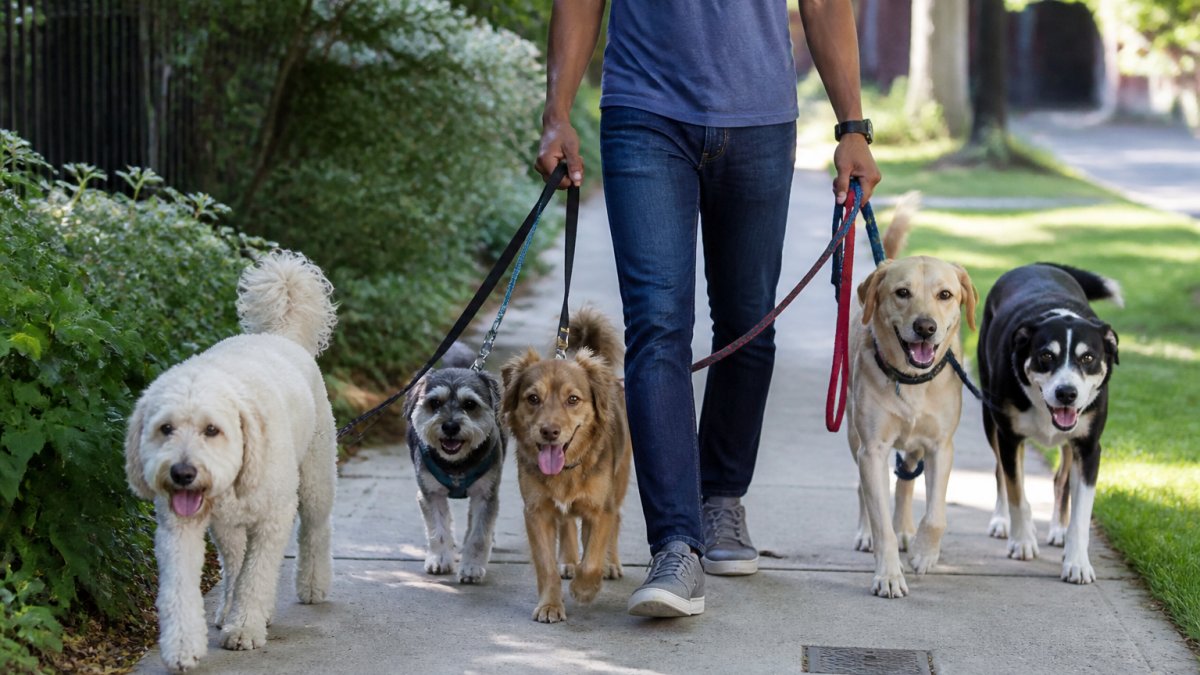
For owners with demanding schedules, the exercise gap is often a logistics problem, not a motivation problem. Professional dog walking closes it when work, travel, or unpredictable hours make a midday walk impossible.
The benefits of professional dog walking go beyond convenience: a consistent walker provides routine, socialization, and fresh air on days you can't. For dogs prone to separation-related behavior, a midday visit breaks up the alone time that fuels destructive chewing and barking.
At Bark West, Steve the Dog Guy runs a one-man operation built around the Park West community, with a flat $20 rate for a 30-minute walk and 24/7/365 on-call availability. Because every walk is customized to the individual dog, anxious or reactive dogs get a pace and route that fits them rather than a rushed group outing. For owners whose schedules change without warning, having a reliable backup walker on call means the dog never misses a day.
Watch Out Don't assume a longer walk fixes everything. If your dog is destructive, pacing, or barking despite daily walks, the problem may be mental stimulation or a medical issue, not mileage. Adding distance to an already-tired dog can make restlessness worse.
Most owners discover the exercise gap the hard way: after the couch cushion is shredded or the neighbors complain. The signs are usually there weeks earlier, and the fix is often simpler than a total routine overhaul. If your schedule makes a consistent daily walk unrealistic, Bark West offers a flat-rate, customized solution with 24/7 on-call availability, fully insured and bonded, so your dog gets the exercise and socialization it needs even when work runs long. Get started with Bark West and give your dog a routine it can count on.
Frequently Asked Questions
What are the behavioral signs of an under-exercised dog?
Under-exercised dogs often show destructive chewing, digging, excessive barking, pacing, and attention-seeking behaviors. They may also become restless at night or struggle to settle. These behaviors stem from pent-up energy that has nowhere to go. If your dog suddenly starts chewing furniture or barking at everything, a lack of physical activity and mental stimulation is often the cause. Increasing daily walks and adding enrichment activities typically reduces these behaviors within days.
How long should a dog exercise daily based on breed?
Exercise needs vary widely by breed. High-energy breeds like Border Collies, Australian Shepherds, and Huskies often need 60 to 120 minutes of vigorous activity daily. Moderate breeds such as Labrador Retrievers and Beagles do well with 45 to 60 minutes. Brachycephalic breeds like Bulldogs and Pugs may need only 20 to 30 minutes of low-impact exercise. Age also matters: puppies and senior dogs need shorter, more frequent sessions. A professional dog walker can help match walk duration and intensity to your dog's specific needs.
How can I tell if my dog is bored or needs more physical activity?
Boredom and lack of exercise look similar but have distinct roots. A bored dog may stare at you, paw at objects, or wander aimlessly even after a walk. A dog lacking physical activity shows more intense restlessness, destructive behavior, and difficulty settling. Mental stimulation, like puzzle toys or training games, addresses boredom. Physical exercise, like a brisk walk or fetch session, addresses pent-up energy. Most dogs need both. If your dog seems unsatisfied after a walk, adding mental challenges often helps more than a longer walk alone.
What are the risks of a dog not getting enough daily exercise?
Chronic under-exercise leads to weight gain, obesity, and joint problems. It also contributes to behavioral issues like destructive chewing, excessive barking, and anxiety. Dogs that lack physical activity may develop lethargy or, conversely, hyperactivity that makes them difficult to manage. Over time, a sedentary lifestyle shortens a dog's lifespan and reduces quality of life. Regular walks support weight management, joint health, and emotional stability. Even 30 minutes of dedicated activity daily makes a measurable difference.
Contact


Comments