How to Handle Anxious Dogs During Walks: A 2026 Guide

Updated: Sep 16
Table of Contents
Signs of Dog Anxiety on Walks: What to Watch For
Early Warning Signs Before the Walk Begins
Body Language Decoding: Stress Signals During the Walk
How to Handle Anxious Dogs During Walks: Step-by-Step
Step 1: Set Up a Predictable Routine
Step 2: Manage the Environment and Choose Quiet Routes
Step 3: Use Desensitization and Counter-Conditioning
Best Harness for Anxious Dogs: Fit, Type, and Leash Setup
How Long Should a Walk Be for an Anxious Dog?
Calm Handler Energy and Emergency Exit Strategies
Emergency Exit Protocol: What to Do When Your Dog Panics Mid-Walk
The "Find It" Cue as a Reset Button
Reading the Difference Between Freeze and Shut Down
Post-Walk Decompression and Multi-Dog Household Tips
Why Decompression Matters (The Mechanism)
A 15-Minute Post-Walk Decompression Protocol
Multi-Dog Households: Walk Alone or Together?
Decompression for the Whole Household
When to Call a Professional Dog Walker or Trainer
Frequently Asked Questions
Last Updated: September 12, 2026
Signs of Dog Anxiety on Walks: What to Watch For
Handling anxious dogs on walks starts with reading signals long before the leash comes out. Catching those cues early keeps a walk from becoming a struggle. This guide from Bark West covers pre-walk signals through post-walk recovery.
Dog anxiety on walks is a stress response triggered by unfamiliar people, other dogs, traffic noise, or unpredictable environments. The American Kennel Club's guide to canine body language notes that subtle signals like lip licking and whale eye often appear before obvious ones. Miss them, and you're managing a reaction instead of preventing one.
Early Warning Signs Before the Walk Begins
The walk starts at home. A dog who hides when the leash appears, refuses treats, or paces by the door is already over threshold.
Watch for these pre-walk signals:
Tucking the tail before you reach the door
Pinning ears back when the harness comes out
Yawning repeatedly in a quiet room
Refusing to step outside despite normally loving walks
A common mistake is interpreting a stiff, frozen dog as "stubborn." That stillness is usually fear, not defiance.
Body Language Decoding: Stress Signals During the Walk
During the walk, stress shows in the body before behavior. A closed mouth, a raised paw held mid-step, or a sudden freeze signals rising tension.
Key stress indicators to track:
Whale eye: whites of the eyes visible as the dog looks sideways
Trigger stacking: multiple small stressors accumulating into one big reaction
Calming signals: lip licking, sniffing the ground suddenly, or turning away
Leash tension: a taut line signals the dog feels trapped, not guided
How to Handle Anxious Dogs During Walks: Step-by-Step
The core method for anxious dogs: reduce surprises, stay under threshold, and reward calm before stress escalates.
Step 1: Set Up a Predictable Routine
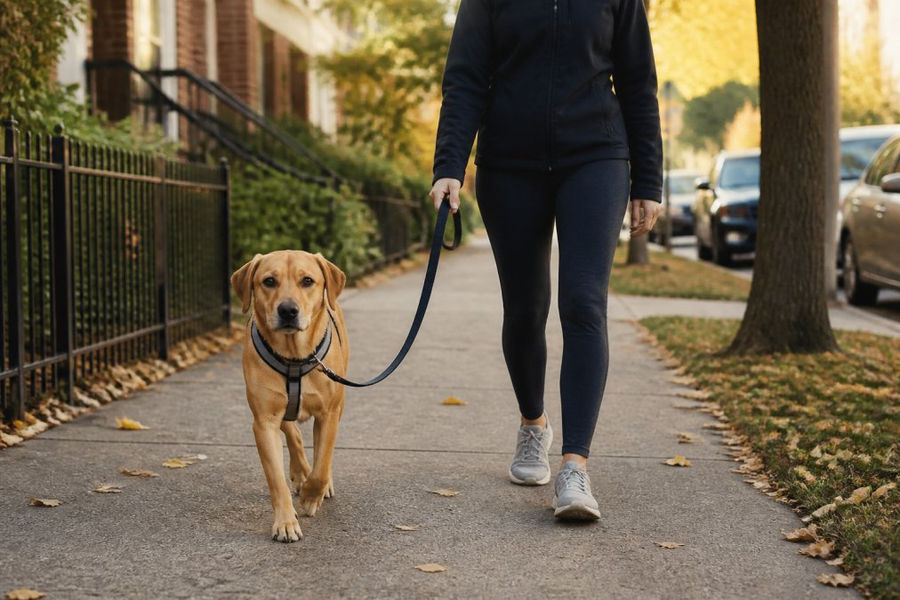
Dogs thrive on predictability. Walk at the same times, use the same route at first, and follow an identical pre-walk sequence: harness on, treat, door, sit, leash clipped, out. A predictable routine lowers baseline arousal, so your dog starts calmer.
Step 2: Manage the Environment and Choose Quiet Routes
Environmental management means choosing where you walk, not just how. Side streets, off-peak parks, and routes with clear sightlines reduce sudden triggers.
Try these adjustments:
Cross the street before reaching a known trigger
Keep a comfortable distance from the dog's flight zone
Avoid narrow sidewalks where passing is unavoidable
Step 3: Use Desensitization and Counter-Conditioning
Desensitization is gradual, low-intensity exposure to a trigger. Counter-conditioning pairs that trigger with something good, usually high-value rewards. The sequence: trigger appears at a distance → dog notices → mark and reward calm → trigger leaves. Repeat until the trigger predicts treats, not fear. This takes weeks, not days.
Pro Tip Keep training sessions under five minutes and end on a win. A dog who succeeds three times in a row learns faster than one pushed through ten repetitions while stressed.
Best Harness for Anxious Dogs: Fit, Type, and Leash Setup
The best harness for anxious dogs is a well-fitted front-clip harness with a fixed-length leash. It redirects pulling without throat pressure, which matters for dogs who lunge when scared.
Fit rules that prevent problems:
Two fingers should fit under every strap
The chest strap sits across the breastbone, not the throat
No gaping at the shoulders when the dog pulls
Avoid retractable leashes. They teach constant tension, and leash tension feeds anxiety. A six-foot fixed leash gives your dog room to move without feeling yanked.
Watch Out A harness that's too loose lets a determined dog back out of it entirely. Check the fit monthly, especially on puppies and dogs losing weight.
How Long Should a Walk Be for an Anxious Dog?
A walk for an anxious dog should be short and frequent, often 15 to 20 minutes, rather than one long outing (akc.org). A calm 15-minute sniff walk beats a stressful 45-minute march. Frequent short walks build confidence without pushing past threshold, and sniffing tires a dog while lowering arousal.
Walk Type | Duration | Frequency | Best For |
Sniff walk | 15-20 min | 2-3x daily | Building calm |
Training walk | 10-15 min | 1x daily | Counter-conditioning |
Exercise walk | 20-30 min | 1x daily | Physical needs |
Decompression walk | 10-15 min | After triggers | Nervous system reset |
Calm Handler Energy and Emergency Exit Strategies
Handler energy sets the tone before any cue. Dogs read our breathing rate, pace, leash grip, and shoulder tension. Shortening the leash when a trigger appears teaches the dog the trigger is dangerous; keeping the line loose teaches the opposite.
The practical version of "calm energy" is mechanical, not mystical:
Breathe on a count. In for four, out for six. A slow exhale lowers your heart rate, and your dog reads that shift through the leash and your body.
Soften your grip. A death-grip on the handle transmits straight down the line. Hold the leash with relaxed fingers and let it drape.
Slow your pace, don't stop it. Freezing signals alert. A slow, deliberate walk signals normal.
Keep your voice low and flat. High-pitched reassurance often reads as alarm to a nervous dog.
Emergency Exit Protocol: What to Do When Your Dog Panics Mid-Walk
Most guides stop at "stay calm." That is not a protocol. When a dog hits threshold, lunging, screaming, bolting, or shutting down, you need a sequence you can run without thinking.
The four-step retreat:
Create distance first, correct later. Turn and walk away from the trigger. Do not stop to ask for a sit, a look, or a touch. Distance is the only thing that lowers arousal in the moment.
Use your body as a visual block. Step between your dog and the trigger, angle your shoulders away, and keep moving. You are a moving wall, not a stationary one.
Break line of sight. A parked car, a hedge, a building corner, or a trash bin all work. The goal is to put a solid object between your dog's eyes and the thing that scared them.
Change the surface underfoot. Crossing from sidewalk to grass, or pavement to gravel, interrupts the dog's focus because the footing feels different. It is a small sensory reset that buys you seconds.
If your dog freezes and will not move:
Do not pull. A taut leash confirms the dog is trapped and can trigger a defensive reaction.
Crouch beside the dog, not in front of them. Side-by-side is less confrontational than face-to-face.
Scatter treats a foot in front of the dog. Sniffing is incompatible with panic, and lowering the head shifts the dog out of a threat posture.
Wait for one voluntary step, then reward it and move slowly toward home or a known safe spot.
If your dog slips the harness or collar:
Do not chase. A running human triggers a chase response in a panicked dog.
Crouch, turn sideways, and call in a happy voice while tossing treats behind you. Most dogs will circle back for the food.
If the dog bolts out of sight, call your local animal control non-emergency line and your microchip registry the same day. Update the chip contact info before you need it, not after.
The "Find It" Cue as a Reset Button
The single most useful cue for an anxious dog is "find it." Charge it at home: say "find it," toss a treat, let the dog eat it. Repeat ten times a day for a week. Once reliable indoors, it becomes your emergency brake outdoors. Spot a trigger, say "find it," scatter treats into the grass. The head goes down, the nose takes over, and the visual trigger loses priority. This is not a distraction trick, it is a nervous-system reset using the dog's strongest sense to override the visual threat.
Watch Out Never force a pass to "prove" your dog can handle it. Avoidance is a legitimate training tool. Every successful retreat teaches your dog that you will keep them safe, which is the foundation for every future counter-conditioning session.
Reading the Difference Between Freeze and Shut Down
A frozen dog is still processing, ears forward or back, eyes tracking the trigger. A shut-down dog has stopped processing entirely: glazed eyes, no response to name, no interest in treats. Freeze responds to distance and a scatter; shut-down responds to removal from the environment. If your dog won't take a high-value treat, training can't happen. Get home, decompress, and log what happened so you can work under threshold next time.
Post-Walk Decompression and Multi-Dog Household Tips
Most guides end the walk at the front door. That is a mistake. A stressful walk leaves stress hormones circulating for hours, and a dog who comes home wired carries that arousal into the next walk. Post-walk decompression is the missing half of the routine.
Why Decompression Matters (The Mechanism)
When a dog is frightened, the body releases adrenaline for immediate response and cortisol for sustained alertness (vcahospitals.com). Adrenaline clears in minutes; cortisol can take hours. A dog scared at 8 a.m. may still run elevated cortisol at noon, which is why a second walk two hours later can go badly even with nothing scary on it, the dog started already loaded. Decompression gives the nervous system a structured off-ramp so cortisol drops before the next outing.
A 15-Minute Post-Walk Decompression Protocol
Run this in order. The sequence matters more than the duration.
Remove gear calmly. Unclip, praise quietly, hang the leash out of sight. Rushing the harness off can read as "the scary thing is over, run."
Offer water, then ignore. Let the dog drink, then leave them alone. Petting, talking, or hovering can keep arousal up.
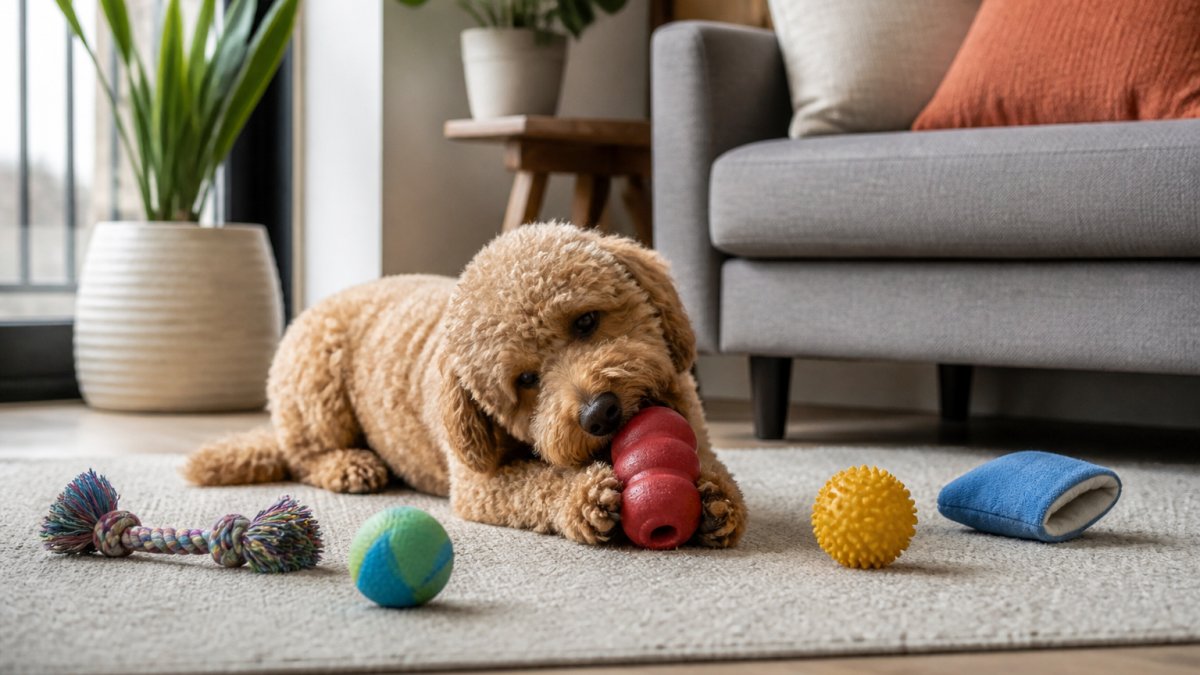
Give a long-lasting chew or food puzzle. Licking, chewing, and foraging are self-soothing. A frozen stuffed toy, bully stick, or snuffle mat works. Aim for five to ten minutes of sustained oral activity.
Provide a dark, quiet space. A covered crate, corner bed, or room away from foot traffic, where the dog can see the exit and isn't cornered.
Do not rehearse the walk. Don't reenact the scary moment, retrain the cue, or "practice" the trigger. Post-walk is for recovery, not lessons.
Signs decompression is working: loose body, slow blinking, sighing, lying flat on one hip, voluntary approach for petting after ten to fifteen minutes.
Signs it is not working: pacing, panting without heat, scanning the room, refusing the chew, shadowing you. If you see these, extend the quiet time and skip the next walk for a yard sniff session.
Pro Tip A sniff walk in the yard is not a lesser walk. Ten minutes of unhurried sniffing lowers arousal and tires a dog mentally. On a bad day, it is a better choice than a stressful loop around the block.
Multi-Dog Households: Walk Alone or Together?
This is the question most guides skip, and the answer isn't one-size-fits-all.
Walk the anxious dog alone when:
The anxious dog is being walked for training. A confident companion will pull focus, take the treats, and set a pace the anxious dog cannot match.
The anxious dog is reactive to other dogs. A companion doubles the triggers on the route.
The confident dog is a "social magnet" who attracts attention from strangers and other dogs.
Walk them together when:
The anxious dog is stable on solo walks and you are adding difficulty on purpose.
The confident dog is genuinely calm, loose-bodied and slow-paced, not just non-reactive. A dog who pulls ahead is not a calming influence.
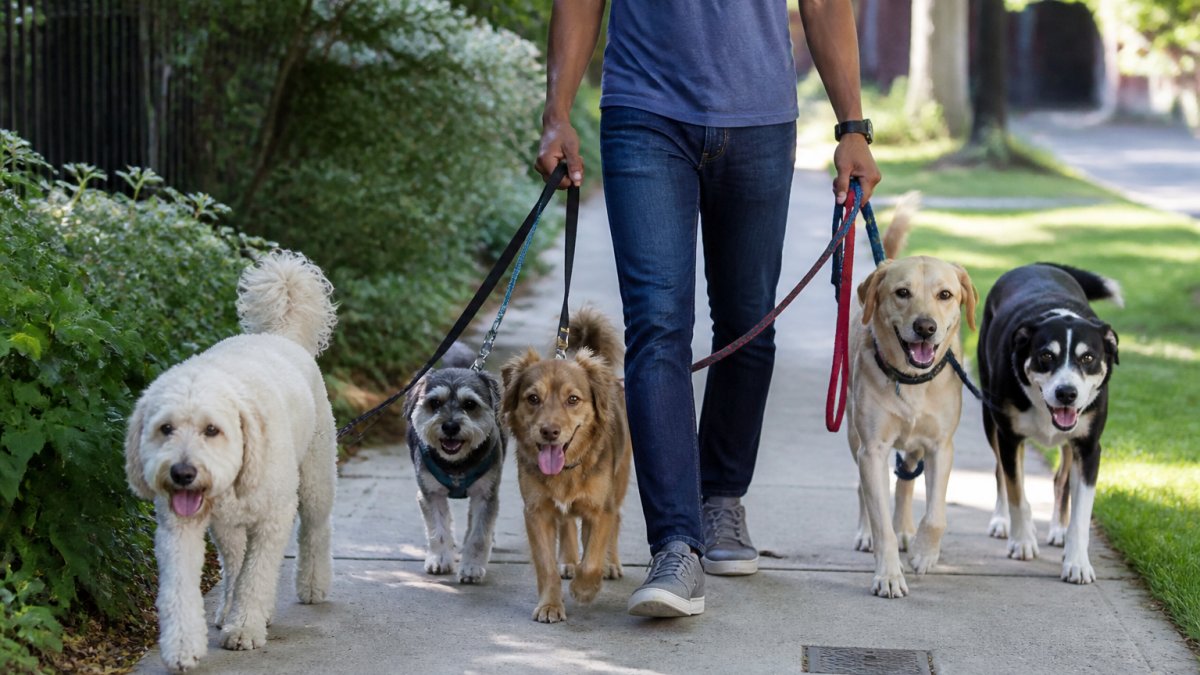
You use a double-clip setup with two separate leashes so you can manage each dog independently.
The rotation rule: In a two-dog home, give the anxious dog the first solo walk of the day, when cortisol is lowest and the neighborhood is quietest. Walk the confident dog second. This prevents the anxious dog from starting the day already behind.
Decompression for the Whole Household
If one dog had a hard walk, the other often picks up the arousal. Give both a quiet chew session after a stressful outing, even if only one was walked. Household calm matters as much as the individual dog's.
Key Takeaway Decompression is not optional recovery, it is part of the training. A dog who winds down properly after a hard walk starts the next one calmer. Skip it, and you are stacking stress on stress, walk after walk.
When to Call a Professional Dog Walker or Trainer
Bring in professional help when your dog's anxiety doesn't improve after several weeks of consistent training, or when walks become unsafe for either of you. A certified trainer or veterinary behaviorist can assess whether fear-based behavior needs a plan beyond basic counter-conditioning.
For daily support, a professional dog walker who understands nervous temperaments makes a real difference. This is where Bark West fits. Steve the Dog Guy customizes every walk to your dog's individual needs, works within a dedicated Park West service area, and stays on call 24/7/365 as a reliable backup when your schedule shifts. It's a flat-rate, fully insured and bonded service built for owners who need dependable care.
Frequently Asked Questions
What are the common symptoms of anxiety in dogs during walks?
Common signs include tucked tail, flattened ears, lip licking, yawning, trembling, and refusing to move forward. Some dogs pant heavily even in cool weather, scan constantly, or try to bolt. Others freeze or drop to the ground. Recognizing these early stress indicators lets you adjust the walk before your dog hits their threshold. If you see multiple signs at once, that's trigger stacking, and it's best to cut the walk short and head home calmly.
How can I help my dog feel safer when encountering triggers on a walk?
Increase distance from the trigger and reward calm behavior with high-value treats. This is the core of desensitization and counter-conditioning: your dog sees the trigger, then gets something great, which slowly changes their emotional response. Keep sessions short and end on a positive note. If your dog won't take treats, they're over threshold and you're too close. Back away, create space, and try again another day at a lower intensity.
Should I avoid walking my dog if they show signs of severe anxiety?
For severe anxiety, a full walk may do more harm than good. Swap it for a short sniff session in a quiet area or a backyard break. Mental stimulation and predictability matter more than distance. If your dog panics at the sight of the leash, work on happy leash associations indoors first. Consult a professional trainer or your veterinarian for a behavior modification plan. Walks should build confidence, not erode it.
What equipment is best for walking an anxious dog?
A well-fitted front-clip harness paired with a flat leash works well for most anxious dogs. It reduces leash tension on the throat and gives you gentle steering control without causing pain. Avoid choke chains, prong collars, and retractable leashes, which add pressure and unpredictability. Look for a harness with padded straps, adjustable chest and girth points, and a back handle for extra security. Have a professional check the fit to prevent escape.
Walks with an anxious dog can feel like a daily negotiation, but the right structure changes that. Bark West offers personalized, professional dog walking with a flat rate for a 30-minute walk, customized care for each dog's temperament, and on-call availability every day of the year. Whether you need a dedicated daily walker or a dependable backup, get started with Bark West and give your dog the calm, consistent walks they deserve.
Contact
Comments