Dog Walking Tips for Busy Professionals

Table of Contents
Why Dog Walking Matters When You're Stretched Thin
Dog Exercise Requirements by Breed
Loose-Lead Walking and Leash Management for Professionals
Front-Clip Harnesses and Leash Reactivity
Positive Reinforcement During Urban Walks
Time-Saving Walking Strategies for High-Energy Dogs
How to Find a Reliable Dog Walker
Vetting Professional Credentials and References
Benefits of 24/7 Dog Walking Availability
Building a Sustainable Daily Routine
Post-Walk Enrichment and Mental Stimulation
Frequently Asked Questions
Last Updated: October 2, 2026
Why Dog Walking Matters When You're Stretched Thin
Your schedule is packed. Work runs late. Meetings stack up. The last thing on your mind is whether your dog got enough exercise today. But here's what matters: a tired dog is a well-behaved dog. A dog that's had proper exercise and fresh air is calmer, less anxious, and happier at home.
Dog walking isn't just about bathroom breaks. It's about mental stimulation, socialization, and physical activity. When you're a busy professional juggling deadlines and commutes, finding time for quality walks becomes nearly impossible, which is why dog walking tips for busy professionals matter so much. That's where understanding your dog's actual needs and having a backup plan makes all the difference.
Bark West works with professionals in the Park West community who face this exact challenge. Many dog owners have demanding schedules but refuse to compromise on their dog's wellbeing. The solution isn't guilt, it's a realistic approach that combines what you can do with what a professional can handle.
The truth is simple: dogs need consistent exercise. Without it, they develop behavioral problems. They gain weight. They become anxious. A good dog walking routine prevents all of this. And when you can't be there, having a reliable dog walker available 24/7 gives you peace of mind.
Dog Exercise Requirements by Breed
Different breeds have wildly different exercise needs. A Chihuahua isn't a Border Collie. A Bulldog isn't a Husky. Matching your dog's actual activity level to your lifestyle is the first step toward sustainable dog walking.
High-energy breeds need 60-120 minutes of exercise daily:
Border Collies
Australian Shepherds
Siberian Huskies
Jack Russell Terriers
Vizslas
Weimaraners
Moderate-energy breeds need 30-60 minutes daily:
Labrador Retrievers
Golden Retrievers
Beagles
Cocker Spaniels
Boxers
Dalmatians
Low-energy breeds need 20-30 minutes daily:
Bulldogs
Basset Hounds
Shih Tzus
Pugs
Mastiffs
Chihuahuas
The mistake most busy professionals make is underestimating their dog's needs. You might think a 15-minute walk is enough. Your dog disagrees. Under-exercised dogs become destructive, anxious, and difficult to manage. They chew furniture. They pull on leash. They bark excessively.
A professional dog walker who understands breed-specific needs can provide the right intensity and duration.
Loose-Lead Walking and Leash Management for Professionals
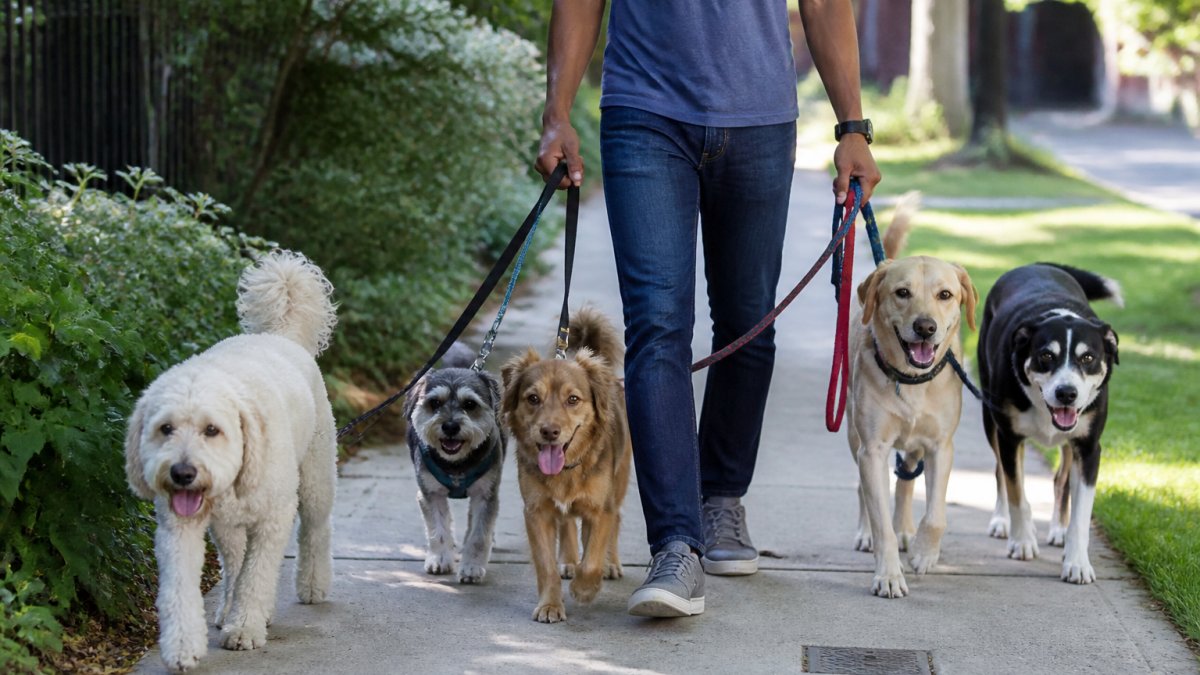
Loose-lead walking is the foundation of every good walk. It means your dog walks beside you with a slack leash, not pulling, not dragging behind. For busy professionals, mastering this technique saves time and prevents injury.
The Complete Canine
Most dogs pull because they haven't learned better. They're not being stubborn. They're following their instinct to explore. Your job is to teach them that pulling doesn't work. The leash goes slack when they walk calmly. The walk stops when they pull.
Start with short sessions. Walk in a quiet area with minimal distractions. When your dog pulls, stop immediately. Don't move forward. Wait for the leash to go slack. Then move again. This teaches cause and effect: pulling = no progress. Calm walking = forward movement.
Be consistent. Every single walk reinforces the lesson or undoes it. Inconsistency is why many dogs never learn. One person lets them pull. Another person doesn't. The dog gets confused and reverts to pulling.
Front-Clip Harnesses and Leash Reactivity
A front-clip harness redirects pulling toward your body instead of forward. When your dog lunges, the harness turns them toward you. This gives you better control without choking. For busy professionals dealing with leash reactivity, a front-clip harness is practical equipment.
Leash reactivity happens when dogs lunge, bark, or pull toward other dogs, people, or distractions. It's not aggression, it's excitement or fear. A reactive dog makes walks stressful and unpredictable. Managing leash reactivity requires patience and the right tools.
A front-clip harness alone won't fix reactivity. You need a plan. Keep distance from triggers when possible. Practice calm behavior on walks. Use high-value treats to redirect attention. Most importantly, stay calm yourself. Dogs sense your tension and react to it.
Positive Reinforcement During Urban Walks
Treats are your secret weapon. Carry high-value treats on every walk. Use them to reward calm behavior, loose-lead walking, and attention to you instead of distractions.
Urban environments are chaotic. Other dogs. Pedestrians. Traffic. Smells. Your dog's brain is overwhelmed. Positive reinforcement helps them focus on you. When your dog looks at you instead of the squirrel, reward it. When they walk calmly past another dog, reward it. When they sit at a crosswalk, reward it.
Timing matters. The reward must come within 1-2 seconds of the behavior. Delayed rewards don't connect in your dog's mind. Consistency is everything. Every time your dog does the right thing, reward it. No exceptions.
This approach works better than punishment. Yelling at your dog doesn't teach them what to do. It teaches them to fear you. Positive reinforcement teaches them what behavior earns rewards. They'll repeat it willingly.
Time-Saving Walking Strategies for High-Energy Dogs
Busy professionals don't have two hours for a walk, which is why dog walking tips for busy professionals focus on efficiency. You need efficiency. The good news: quality beats quantity. A focused 30-minute walk with mental stimulation beats a mindless 60-minute stroll.

Micro-walks are short, intense sessions that tire dogs out faster:
Walk at a brisk pace for 15-20 minutes
Include varied terrain: hills, stairs, uneven ground
Add mental challenges: sniff work, obstacles, direction changes
Do 2-3 micro-walks daily instead of one long walk
Scent work engages your dog's brain. Let them sniff. Sniffing is mental exercise. A dog that's sniffed for 20 minutes is as tired as one that's run for 40 minutes. This is why professional dog walkers often spend time letting dogs explore scents instead of just covering distance.
Vary your route. New environments stimulate your dog mentally. Same walk every day gets boring. Different streets, parks, and paths keep your dog engaged and interested.
Combine walking with training. Practice loose-lead walking, heel commands, and recall during walks. This adds mental stimulation without adding time. Your dog learns and exercises simultaneously.
For high-energy dogs, consistency matters more than duration. A 30-minute walk every single day beats a 90-minute walk twice a week. Daily routine establishes predictability. Your dog knows exercise is coming. This reduces anxiety and destructive behavior.
How to Find a Reliable Dog Walker
Not all dog walkers are equal. Some understand dog psychology and behavior. Others just show up and go through the motions. For busy professionals, finding someone you can trust is critical.
Start with referrals. Ask neighbors, your vet, and friends for recommendations. Word-of-mouth is more reliable than online reviews because you know the person recommending.
Interview potential walkers. Ask about their experience with your dog's breed and temperament. Ask how they handle leash reactivity, anxiety, or behavioral issues. A good walker has answers. They've dealt with these situations before.
Watch them with your dog. A good walker greets your dog calmly. They don't force interaction. They observe your dog's body language. They adjust their approach based on what they see.
Ask about their daily routine. How many dogs do they walk? How long are walks? Do they provide updates? A professional walker provides updates, photos, messages, or notes about your dog's behavior.
Trust your gut. If something feels off, it probably is. You're leaving your dog with this person. You need to feel confident they'll treat your dog with care and expertise.
Vetting Professional Credentials and References
Ask for references from current clients. A legitimate dog walker provides them. Call those references. Ask about reliability, how the walker handles their dog, and whether they'd recommend them.
Verify insurance and bonding. A professional dog walker carries liability insurance. This protects you if something goes wrong. Ask to see proof of insurance. It's a basic business practice.
Check social media and online presence. A professional walker has consistent branding and professional communication. They respond to messages promptly.
Don't assume experience equals expertise. Ask specifically about their philosophy and methods.
For busy professionals, vetting takes time upfront but saves headaches later.
Benefits of 24/7 Dog Walking Availability
Emergencies happen. Your meeting runs three hours late. A flight gets delayed. You're stuck in traffic. Your regular dog walker isn't available. What happens to your dog?
Building a Sustainable Daily Routine
Sustainability is the key word here. You can't maintain a routine you can't stick to. Design your dog walking routine around your actual life, not your ideal life.
Post-Walk Enrichment and Mental Stimulation
A walk is just the beginning. After your dog comes home, they need mental engagement. This prevents boredom and destructive behavior.
Frequently Asked Questions
How much exercise does my dog actually need each day?
Most dogs need 30 minutes to 2 hours of daily exercise depending on breed, age, and energy level. High-energy breeds like Border Collies and Australian Shepherds require closer to 2 hours, while smaller or older dogs may need just 30 minutes. Dog exercise requirements by breed vary significantly, so consult your veterinarian about your specific dog's needs. Insufficient exercise leads to behavioral problems like pulling and lunging on walks.
What's the best way to find a reliable dog walker when I'm too busy to vet them myself?
Start by asking for references from friends, your veterinarian, or local pet communities. When evaluating candidates, ask how they handle leash reactivity, their experience with your dog's breed, and request to meet them in person before hiring. Check for liability insurance and bonding. How to find a reliable dog walker also means asking about their daily routine. Trust your instincts about their professionalism and genuine care for animals.
What are the benefits of 24/7 dog walking availability for my unpredictable schedule?
On-call dog walking availability ensures your pet gets exercise even when work runs late or plans change unexpectedly. Benefits of 24/7 dog walking availability include consistent daily routine despite schedule chaos, and the safety net of immediate help during emergencies. This prevents behavioral issues caused by pent-up energy. For professionals with unpredictable commutes or travel, round-the-clock access means your dog's exercise and socialization needs are always met.
How can I manage leash pulling and lunging while maintaining positive reinforcement?
Use a front-clip harness to redirect pulling without choking, and reward calm behavior with treats during walks. Practice loose-lead walking in low-distraction environments first, then gradually increase difficulty. When your dog lunges or pulls, stop moving and wait for calm behavior before proceeding. Consistency is critical, every family member and professional walker must use the same techniques. Positive reinforcement builds confidence and reduces leash reactivity far more effectively than punishment-based methods.
Contact


Comments