Dog Walker vs Dog Daycare for Socialization

Table of Contents
Dog Walker vs Dog Daycare for Socialization: A Direct Comparison
Quick Comparison Table
Is Dog Daycare Good for Socialization?
Quality vs Quantity of Social Interaction
When a Dog Walker Is the Better Choice for Shy Dogs
A Readiness Checklist Before You Try Group Play
How to Build Socialization at the Dog's Pace
Signs Your Dog Isn't Ready for Group Play
Health and Behavior Prerequisites for Group Settings
Exercise, Mental Stimulation, and Energy Level Match
Physical Exercise vs Mental Stimulation
Matching the Option to the Dog
How Much Activity Does a Dog Actually Need?
A Simple Weekly Activity Plan
When One Walk Isn't Enough, and When Daycare Is Too Much
How Often Should a Dog Go to Daycare?
Supervision, Safety, and Recognizing Stress Signals
Blending Both Services for a Balanced Routine
Frequently Asked Questions
Last Updated: October 15, 2026
Dog Walker vs Dog Daycare for Socialization: A Direct Comparison
Choosing between a dog walker vs dog daycare for socialization comes down to one question: does your dog do better with one familiar person or a rotating group of dogs?

The American Kennel Club notes that daycare suitability depends heavily on the individual dog, and that hiring a dog walker is a legitimate alternative for owners whose dogs don't thrive in group settings.
Quick Comparison Table
Factor | Dog Daycare | Dog Walker |
Socialization type | Group play with many dogs | One-on-one or small pack |
Exercise level | Hours of off-leash play | 30-minute structured walk |
Supervision | Staff-monitored playrooms | Direct, continuous handling |
Best for | Social, high-energy dogs | Shy, anxious, or reactive dogs |
Schedule fit | Fixed drop-off and pickup | Flexible, on-demand timing |
Mental stimulation | High, from constant interaction | Moderate, from route variety |
Risk profile | Overstimulation, group conflict | Limited, controlled exposure |
Cost model | Per-day rate | Per-walk rate |
Is Dog Daycare Good for Socialization?
Dog daycare is good for socialization when the dog enjoys group play and the facility manages the group well. The benefit comes from repeated, supervised dog-to-dog interaction, not the mere presence of other dogs. A well-run daycare separates dogs by size and play style, monitors body language, and gives rest breaks.
Quality vs Quantity of Social Interaction
More dogs does not mean better socialization. An hour of well-matched, supervised play teaches a dog more than six hours of chaotic group time.
Watch for these signs of a quality program:
Dogs grouped by size, age, and energy level
Staff trained to read stress signals and intervene early
Scheduled rest periods, not nonstop play
Watch Out A daycare that lets dozens of dogs run together with no breaks or grouping is a recipe for overstimulation and conflict. A dog that comes home wired, snappy, or exhausted every time is telling you the environment is too much.
When a Dog Walker Is the Better Choice for Shy Dogs
A dog walker is the better choice for shy dogs because it removes the pressure of a group and builds trust with one consistent person.
A common mistake is pushing a shy dog into daycare to "bring it out of its shell." Forced group exposure can deepen fear and create lasting negative associations with other dogs. The goal is positive, controlled exposure, not more hours around other dogs.
A Readiness Checklist Before You Try Group Play
Before booking a daycare evaluation, run your dog through this checklist covering the four things that predict success in a group: comfort around unfamiliar dogs, play style, stress signals, and gradual introductions.
Comfort around unfamiliar dogs
Your dog can see another dog at a distance without freezing, lunging, or trying to bolt
Your dog can pass another dog on a sidewalk with a loose leash and a relaxed body
Your dog recovers within a minute or two after a surprise encounter
Play style
Your dog uses play bows, bouncy movement, and turn-taking during play
Your dog pauses during play and lets the other dog pause too
Your dog can be called away from play and will disengage
Stress signals to watch for
No whale eye (whites of the eyes showing), lip licking, or out-of-context yawning
No tucked tail, flattened ears, or attempts to hide
No stiff, frozen posture when another dog approaches
Gradual introductions
Your dog has met at least one new dog calmly in the last month
Your dog does better with one new dog at a time than with a crowd
Your dog can be introduced on neutral ground rather than in a confined space
If most boxes are checked, a supervised daycare trial is reasonable. If several are unchecked, start with a walker and build skills first.
How to Build Socialization at the Dog's Pace
A walker can work on gradual, low-stakes exposure: passing other dogs at a distance, practicing calm behavior on a quiet route, and building confidence step by step, socialization at the dog's pace, not the group's. A practical progression:
Distance work. Walk parallel to another dog at 30 to 50 feet, rewarding calm behavior.
Parallel walking. Walk alongside a calm, known dog with both handlers keeping slack leashes.
Brief greetings. Allow a three-second sniff, then move on before either dog gets tense.
Short group time. Try 10 to 15 minutes with one well-matched dog before attempting a full daycare day.
End each step on a positive note. If your dog regresses, back up a step rather than pushing forward.
Signs Your Dog Isn't Ready for Group Play
If your dog shows any of these, start with a walker before considering daycare:
Tucking its tail, flattening its ears, or trying to hide
Freezing or refusing to move when other dogs approach
Growling, snapping, or lunging at dogs or people
Watch Out A dog that shows repeated growling, snapping, or lunging is not a candidate for a group play environment. Consult a veterinarian or a qualified behavior professional before attempting daycare. Group settings can make fear-based behavior worse, not better.
Health and Behavior Prerequisites for Group Settings
Most facilities require current vaccinations (rabies, distemper, parvovirus, often Bordetella), a negative fecal test, and proof of flea and tick prevention; some also require a temperament screening or trial day. If your dog is intact, senior, or has a chronic condition, ask the provider directly, many group programs have restrictions. When in doubt about readiness, ask a veterinarian or qualified behavior professional, not the front desk.
Exercise, Mental Stimulation, and Energy Level Match
Exercise needs should drive the decision more than convenience. A 30-minute walk delivers steady activity and mental stimulation from new sights and smells. Daycare delivers hours of off-leash play, suiting high-energy and young dogs that need to burn real energy.
But "high energy" and "low energy" aren't enough. What matters is the type of activity, the duration, and how much mental work is built in.
Physical Exercise vs Mental Stimulation
Dogs need both. A walk provides forward motion plus a steady stream of scent, sound, and sight input, mental work. Daycare provides bursts of running and wrestling plus constant social negotiation, physical and social work, but potentially overstimulating rather than calming.
A useful rule of thumb: a tired dog is not always a satisfied dog. One that comes home from daycare and paces or cannot settle is physically tired but mentally wired; one that sleeps deeply after a sniff-heavy walk got mental satisfaction, not just physical fatigue.
Matching the Option to the Dog
Use the dog's breed group, age, and daily routine as your guide:
Herding and sporting breeds (Border Collies, Australian Shepherds, Labrador Retrievers, Golden Retrievers): These dogs were bred to work for hours. A single 30-minute walk rarely meets their needs. Daycare a few days a week plus a longer structured walk or training session on other days is a common fit.
Working breeds (Boxers, Rottweilers, Siberian Huskies): They need purposeful activity, not just a stroll. A walk with training cues, or a daycare day with structured play, works better than a slow loop around the block.
Terriers (Jack Russell Terriers, Scottish Terriers): High drive, short bursts. A walk with sniffing and a short training session often satisfies them more than a long group play session.
How Much Activity Does a Dog Actually Need?
Exact needs vary by breed, age, and health, but a common pattern:
High-energy adult dogs: 60 to 120 minutes of activity per day, split between physical and mental work
Moderate-energy adult dogs: 30 to 60 minutes per day
Low-energy, senior, or brachycephalic dogs: 15 to 30 minutes per day, often split into two short walks
A 30-minute walk covers the moderate range. Daycare covers the high range on the days it happens but doesn't replace activity on other days. That's why a blended routine, daycare two or three days a week, walks the rest, often matches a dog's real needs better than either option alone.
A Simple Weekly Activity Plan
Day | Activity | Why |
Monday | Daycare | Burns weekend energy, social time |
Tuesday | Walk | Recovery and routine |
Wednesday | Daycare | Midweek social and exercise |
Thursday | Walk | Calm, one-on-one attention |
Friday | Daycare or walk | Based on the dog's energy |
Saturday | Longer walk or training | Mental work and bonding |
Sunday | Rest or short sniff walk | Recovery |
Pro Tip Track your dog's behavior for a week after each daycare day. If it comes home relaxed and settles easily, the frequency is right. If it comes home frantic or shuts down, cut back and add more walk days.
When One Walk Isn't Enough, and When Daycare Is Too Much
For a working breed or young dog, one walk may not be enough. For a senior or low-energy companion, a full day of group play is often too much. The signal is in the dog's behavior after the activity: one that settles, eats normally, and sleeps well got the right amount; one that paces, skips meals, or snaps at housemates got too much, or the wrong kind.
How Often Should a Dog Go to Daycare?
Most dogs do well with two to three daycare days per week, balanced with walks or home time. Daily daycare suits only the most social, high-energy dogs; for everyone else, a few days a week provides social and exercise benefits without the overstimulation of constant group exposure.
A practical weekly rhythm looks like this:
Day | Activity | Why |
Monday | Daycare | Burns weekend energy, social time |
Tuesday | Walk | Recovery and routine |
Wednesday | Daycare | Midweek social and exercise |
Thursday | Walk | Calm, one-on-one attention |
Friday | Daycare or walk | Based on the dog's energy |
Supervision, Safety, and Recognizing Stress Signals
Supervision quality decides whether either option is safe. Daycare relies on staff to manage a group, so the handler-to-dog ratio matters enormously.
Ask every provider these questions before you commit:
How many dogs per handler at one time?
How are dogs screened before joining a group?
What vaccinations and health checks are required?
Recognizing stress early prevents problems. Look for whale eye (whites showing), stiff posture, lip licking, out-of-context yawning, and pinned ears, signs a dog is uncomfortable.
The American Veterinary Medical Association's guidance on canine behavior stresses that understanding normal versus stressed behavior is central to a dog's welfare in any group setting.
Key Takeaway The best provider is not the one with the most dogs or the longest hours. It is the one that screens carefully, supervises closely, and separates dogs the moment stress signals appear.
Blending Both Services for a Balanced Routine
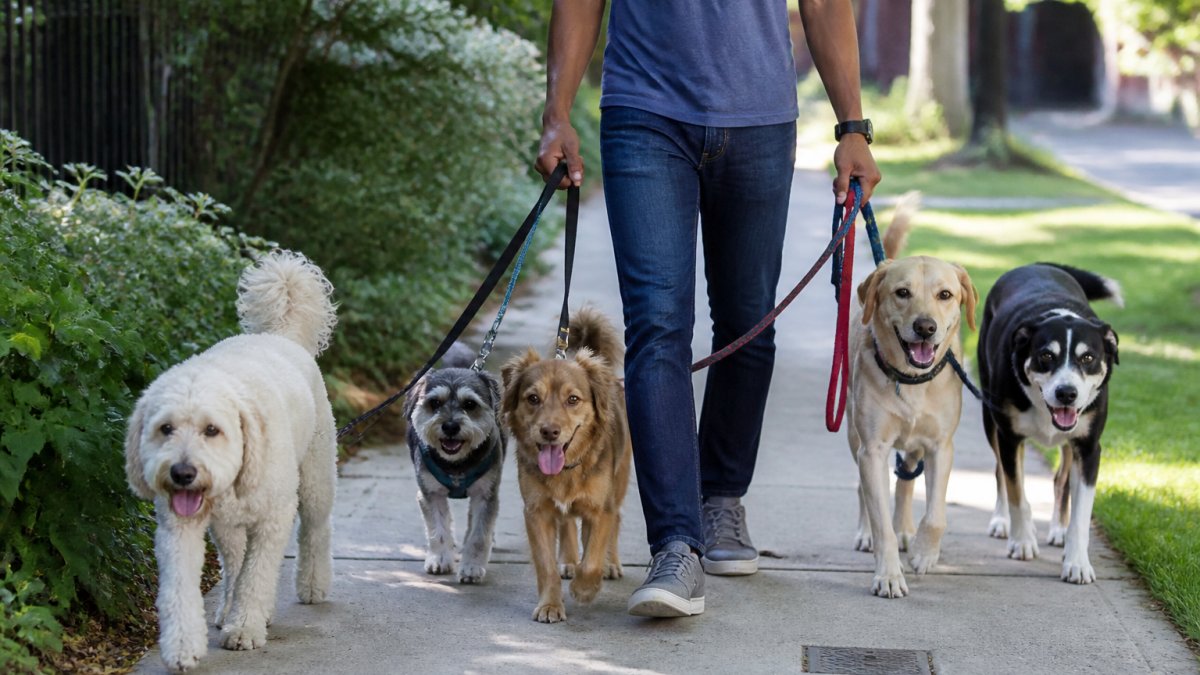
The strongest routine often uses both.
This blend solves the most common scheduling problem: unpredictability. When a meeting runs late or a trip extends, a reliable on-call walker fills the gap a fixed daycare schedule cannot.
Bark West is built around exactly that role.
The Humane Society's pet care resources reminds owners that consistency and routine are among the most important factors in a dog's daily wellbeing, which is why a blended plan beats an all-or-nothing approach.
The real challenge isn't picking a side in the dog walker vs dog daycare for socialization debate.
Frequently Asked Questions
Is doggy daycare a good way to socialize a dog?
Dog daycare can be excellent for socialization when the environment is well-managed. Dogs learn appropriate play styles, read other dogs' body language, and burn energy through supervised group play. However, quality matters more than quantity. A daycare that groups dogs by size and temperament, maintains proper staff-to-dog ratios, and monitors for stress signals will help your dog far more than a crowded, chaotic facility. For dogs that are already comfortable in groups, daycare offers consistent dog-to-dog interaction that solo walks cannot replicate.
Can a dog walker help socialize a dog?
Yes, though the type of socialization differs from daycare. A dog walker provides individual attention and can expose your dog to new sights, sounds, and environments during walks. Group walks with a professional walker introduce controlled dog-to-dog interaction. For shy or anxious dogs, this one-on-one approach often works better as a starting point because it builds confidence gradually without the pressure of a large pack. Many walkers also reinforce basic commands and leash manners during outings.
Is a dog walker or daycare better for a shy dog?
For most shy dogs, a dog walker is the better starting point. One-on-one walks let your dog build trust with a single person and explore at their own pace. Group daycare can overwhelm a shy dog, especially if the facility does not separate dogs by temperament. Once your dog shows comfort with the walker and basic socialization, you might try a small, structured daycare setting. Watch for stress signals like tucked tails, excessive panting, or hiding, and pull back if they appear.
How often should a dog go to daycare for socialization?
Most dogs benefit from two to three daycare visits per week for socialization. Daily attendance can lead to overstimulation, especially for dogs that are already well-socialized. Puppies and high-energy breeds may need more frequent visits, while senior or anxious dogs often do better with one or two sessions. Pair daycare days with solo walk days to give your dog mental rest. If your dog comes home exhausted, irritable, or reluctant to go, reduce the frequency.
What are the downsides of doggy daycare?
Dog daycare can cause overstimulation, stress, and behavioral regression if the environment is not well-managed. Some dogs pick up bad habits like excessive barking or rough play. Illness spreads more easily in group settings, so vaccination requirements matter. Cost adds up quickly, and not every dog thrives in a pack. Dogs that are shy, reactive, or prefer solitude may find daycare overwhelming. Always tour a facility, ask about staff training, and observe how dogs are grouped before committing.
Contact


Comments